



Return to heavy squats, deadlifts, and presses without stopping training.
Rebuild the movement capacity and confidence to train hard again, so you can stop modifying every workout and second-guessing what your body can handle.
Train past pain, not around it.
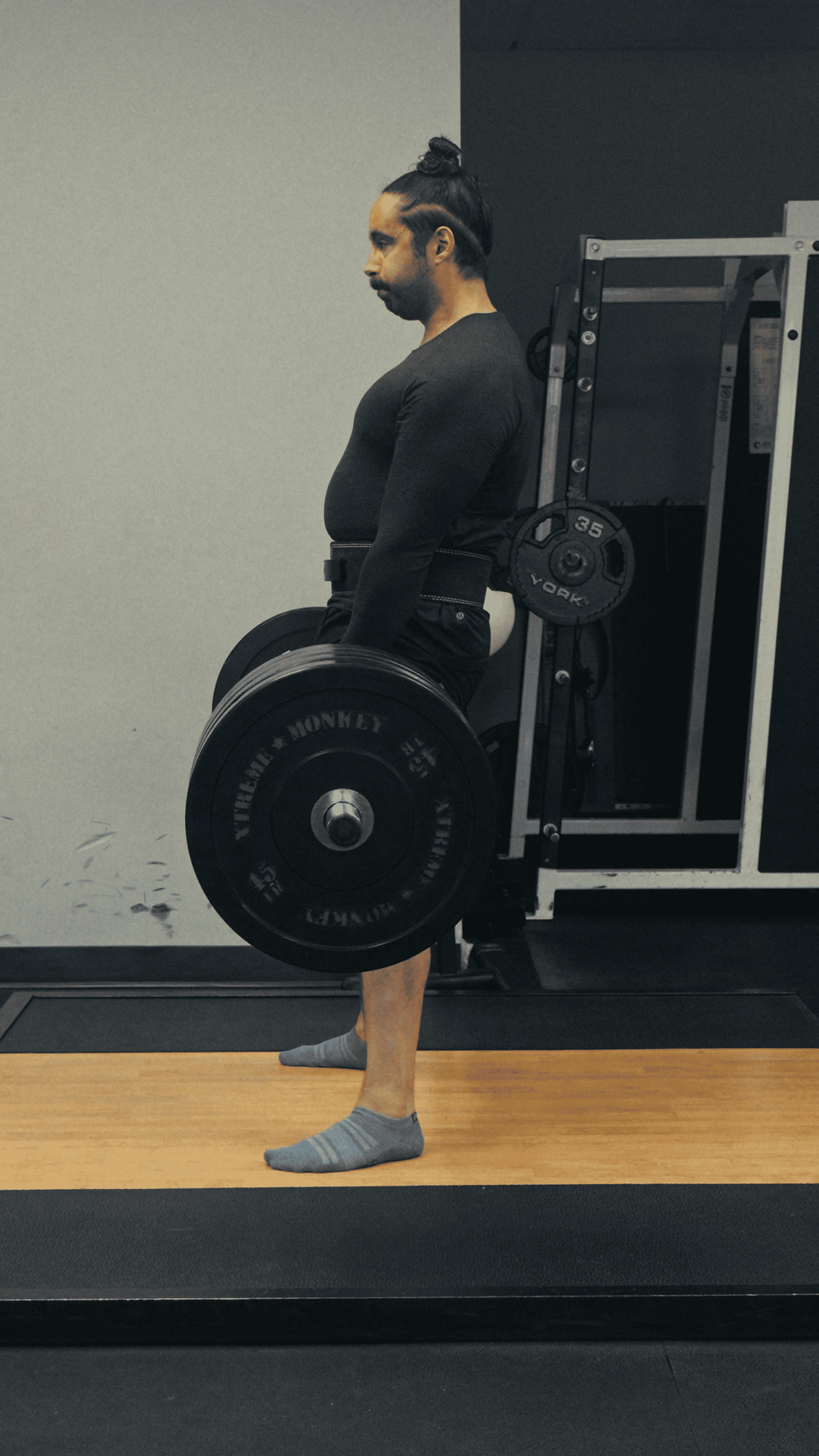
3 years of back pain. 3 cortisone shots. He couldn't walk his dog and was afraid to sneeze.
Now a whole vacation without thinking about his back.
"I was definitely a 10 out of 10 for feeling that liability. My numbers have dropped to like a 2."
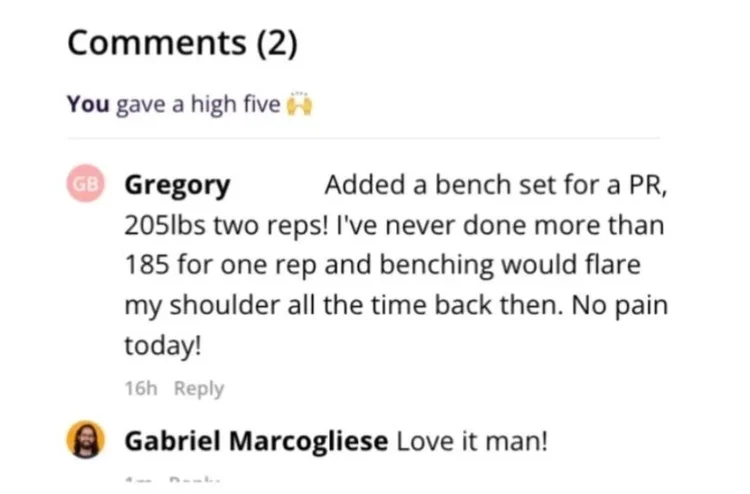
7-year bench plateau with recurring pain flares.
New PRs in 3.5 months.
In French with English subtitles.
of pain.
Back to training in 12 weeks.
More results
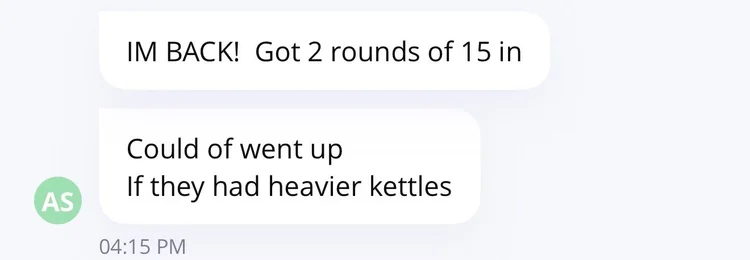
Couldn't walk her dogs. 4 months out of the gym.
Now she's back under the bar.
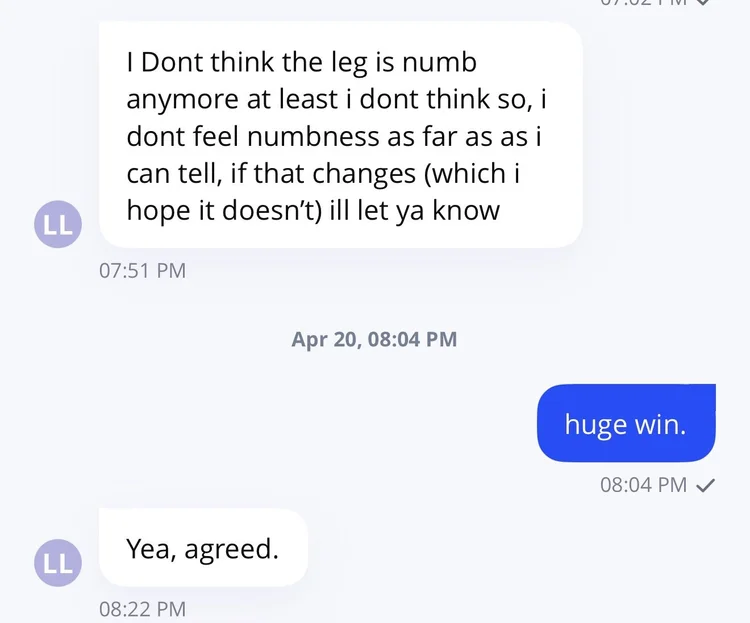
Stress fracture and surgery.
Running again 6 weeks post-op.
Pain plus leg numbness.
Now she's lifting heavy again, training 5x a week.
Individual results vary. Everyone's body, history, and effort are different.
Read the full stories →You've already tried to deal with this.
PT. Chiro. Rest. Stretching. Mobility work. YouTube exercises. Maybe more than one round of rehab.
Some of it helped. The pain settled down for a while.
Then you added weight again, and suddenly you were thinking about your body in a way you never used to.
You pause before a working set and wonder if you should strip some weight off.
You change the exercise because something feels "off."
You finish a set and immediately scan your body to see how it reacted.
Everyone told you to rest, stretch, and "ease back into training."
Nobody told you what that means when the goal is loading a bar again.
You're technically still training. It just feels like you're managing it now.
If pain has changed how you train, not just how you feel, REBUILD™ was built for that gap.
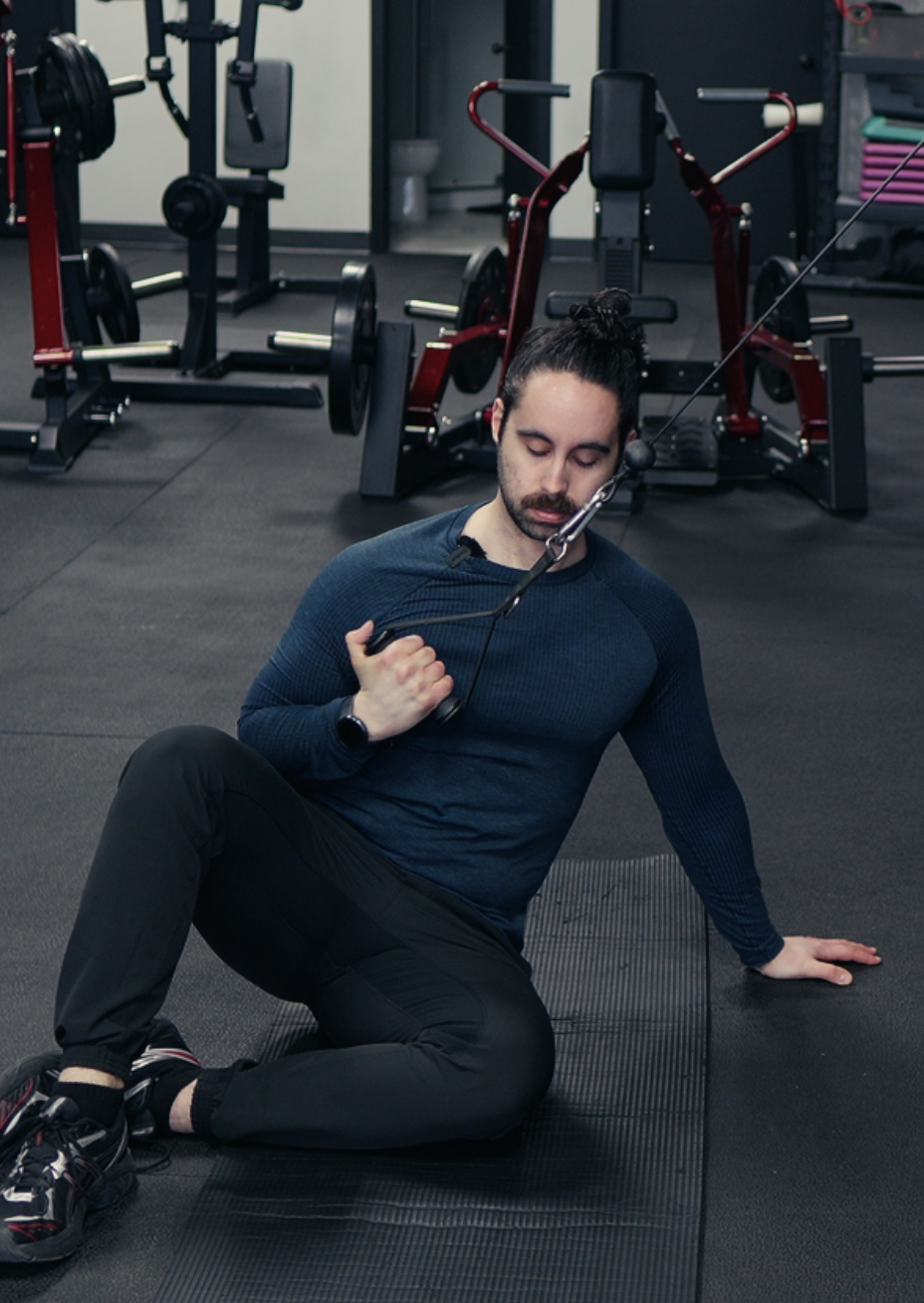
You deserve to train hard without limitations or fear.
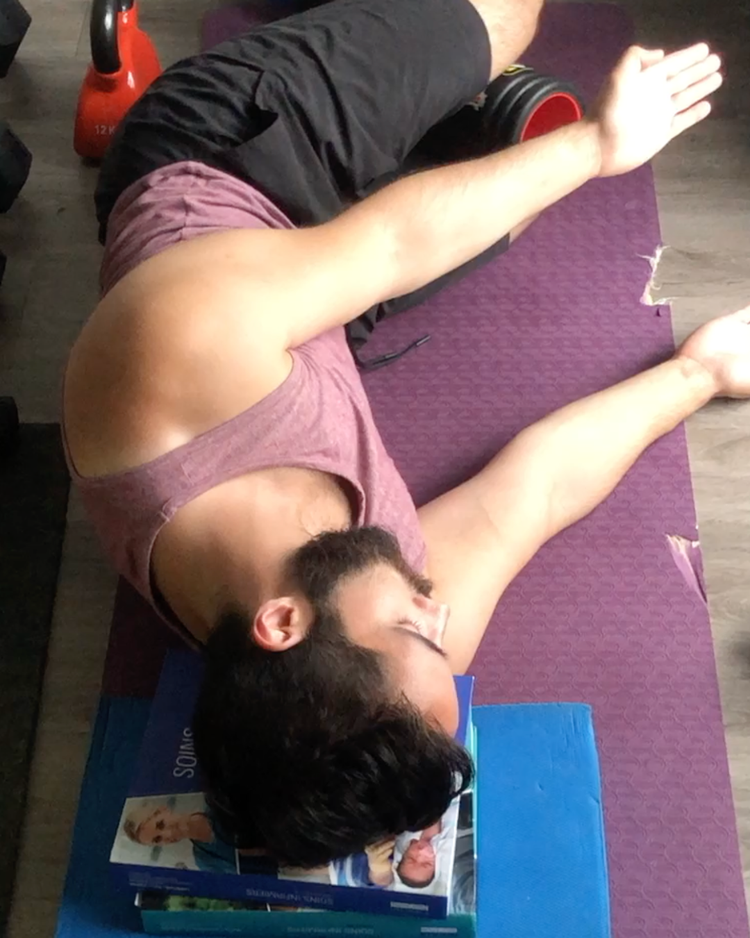
I've lived the other side of this myself.
I dealt with back pain for years.
At my worst, I developed drop foot while studying kinesiology and went years without being able to deadlift normally.
Today, I deadlift close to 500 lb.
REBUILD™ exists partly because I wanted to build the bridge back to training I needed myself.
The first 30 days give us a clearer read on your training.
We start with your assessment, video review and training history.
Then you start training.
Over the first 30 days, we use your program, your response to load, and what we're seeing in training to get clearer on what needs attention and how we should progress.
During those first 30 days, we establish:
- Your current movement and training baseline
- What happens when training demands increase
- What can stay in your program
- What needs adjusting
- How you respond to load and progression
- What the next phase should focus on
By the end of the first 30 days, you'll have a much clearer picture of the road ahead and a realistic REBUILD timeline.
REBUILD isn't built around taking you out of training.
The plan isn't to automatically:
- Stop lifting for 6 to 8 weeks
- Foam roll for an hour every day
- Stretch endlessly
- Avoid squats and deadlifts forever
- Throw away your entire training program
- Start from zero
You're already a lifter. The goal is to build on that.
Reveal → Reset → Rebuild
First, we find the problem we actually need to work on.
Then we work on it and rebuild the foundation.
From there, we start stacking load, volume, intensity, and more specific training back on top.
Find the problem we actually need to work on.
We start with your training history, what's been bothering you, what you've already tried, how you're moving, and what you're trying to get back to.
Then I want to see what happens when we put that back into the context that actually matters.
Training.
What can you currently tolerate?
What changes as the demands go up?
What happens when we bring the squat, deadlift, press, or activity you care about back into the picture?
That gives us the main problem we need to work on and a starting point for your program.
We know what we're working on and where to start.
Rebuild the foundation.
Once we know what we're working on, we start changing it.
That can mean the exercises we use, how you set them up, range of motion, movement work, and where the effort starts.
You're still training through this.
We can use the compound lifts we're trying to get you back to, just at the version that makes sense for where you are right now.
Then we watch how you respond and keep adjusting.
We test.
We retest.
We make the next change.
We've built a stronger foundation to start loading.
Build real training back on top.
Feeling better doesn't automatically mean you're ready for the training you want.
Now we start driving everything toward the lifts and activities you actually care about.
Across this phase, we progressively bring back load, volume, intensity, range, RPE, and exercise specificity.
Progressive loading
The load goes up as your training shows us you're ready for more.
Force tolerance
We bring more training stress back into the program.
Movement adaptability
The movement options we've worked on need to hold up as the training gets harder.
Load Trust
You get more exposure to the lifts and loads you've been hesitant around while we keep watching how you respond.
The training gets closer and closer to what you actually want to be doing.
Training starts looking more like the training you actually want to do again.
We keep building load, volume, and intensity toward the lifts you care about, based on how you're responding.
What the path looks like
REBUILD 1:1 runs four months. How you move through each phase inside those four months is individual, so I won't pretend everyone moves on the same calendar.
-
First 30 daysREVEAL
We assess, find the problem we need to work on, start your program, and see how you respond.
-
NextRESET
We work on that problem and rebuild the foundation. The program changes as your training response changes.
-
ThenREBUILD
We stack load, volume, intensity, range, and more specific training back on top, and we keep retesting.
The goal is to move from:
"Can I train this today?"
back toward:
"How hard am I training today?"
We progress based on what your training is actually showing us.
This is for you if...
You've been dealing with pain for months or years, and you've already tried to solve it.
You got relief, but never a clear roadmap back to serious training.
You're still modifying lifts and holding back when the weight gets heavier.
Or you've been cleared, discharged, told you're fine, and you still don't trust your body under load.
Training matters to you, and you want to train hard again.
This isn't for you if...
You want passive rehab.
You want a quick fix.
You don't want to train consistently.
You're unwilling to adjust your training while we rebuild.
You're looking for a PDF and a few exercises.
How REBUILD 1:1 works
You shouldn't have to wait a week wondering what to do because something changed in training.
Full Reveal assessment
Your training is based on your body, your history, and your goals. You get clarity before we start changing things.
Personalized programming
Your plan is built around what we find, in my training app, and it isn't static. If something changes, we can look at what's happening and decide what makes sense next.
Sometimes the load changes. Sometimes the exercise changes. Sometimes we keep something where it is and build more there first.
The plan changes with your training.
1:1 calls
Time with me to go through your training, your progress, and what comes next.
Monday Loom review
Every week, I review your training and give you clear direction for the week ahead.
Video form feedback
Send me the lifts that matter. I can see what's actually happening under load and help you make the next adjustment from there.
Unlimited messaging
If something changes, you can ask. If a flare-up happens, we deal with it then, instead of waiting for the next scheduled call.
Movement Lab
A weekly group call where you can connect with other members, bring questions, share updates, talk through what's going on in your training, and work through different topics and Q&A with me.
Tuesdays at 4:30 PM ET.
Your job inside REBUILD™ is simple:
Train. Communicate. Progress.
You won't be buried in modules or spend your week on coaching calls.
Which level of support makes more sense?
Both use the same REBUILD framework. The difference is how much of the coaching is built around you individually.
Your symptoms or training response change week to week.
You want your entire program built and adjusted around you.
You want direct access to me throughout the process.
Your situation is relatively stable.
You mainly need a clear progression and coaching feedback.
You're comfortable following the process in a group format.
Still not sure? Message me what's going on and I'll tell you which one I'd pick for you.
Tap your option and send me "I'm in." If you have questions first, ask me there.
Why now?
I'm not going to give you a fake deadline.
REBUILD 1:1 is hands-on coaching, so there is a limit to how many people I can coach properly at once.
If you're already spending every week modifying training, avoiding lifts, and wondering what your body can handle, another few months of the same thing probably won't give you much new information.
At some point, you need a plan you can actually test.
Ready to REBUILD?
If you want help figuring out what comes next, choose the level of support that makes the most sense.
Tap your option and send me "I'm in."
If you're not sure which one fits, tell me what you're unsure about and I'll give you a straight answer.
REBUILD™ is a training and coaching program. It doesn't replace medical diagnosis or treatment.
© GMarco Kinesiology · Privacy policy